Reflections. And next steps.

I spent a few days in Amsterdam last week, and had some very interesting and fruitful sessions with faculty members from the Netherlands Film Academy and Amsterdam University of the Arts. Also, nice to get positive feedback on what I’m working on and affirmation that it’s relevant and interesting for more than just me!

In the aftermath, I’m starting to see the contours of where I’m headed next, both with respect to film school pedagogy and the relationship between art and AI.

1. Research outcome

I entered into my research semester with some ideas about how to present the results, but after discussions with members of the FilmEd research group at the Film Academy, these ideas are starting to become more concrete. I firmly believe that theory and practice must go hand in hand in order for either to be effective and useful, and have set myself the goal of giving filmmaker-educators a more explicit theoretical toolbox to draw on in their practice in the classroom and workshop.

As I’ve observed previously, there is relatively plentiful material on «how to» for filmmaker-educators (and artist-educators), but there is much less material available on questions of «why».

A few years ago, I wrote a handbook for teachers at the Norwegian Film School. Like many other tools, it focussed more on how than on why, although I did refer to the work Heidi Philipsen had done while researching the Danish Film School. It was quite specific to the peculiarities and structures of our own film school, and perhaps not so useful for anyone else. I last updated it in 2018, and have more or less considered it a dead end.

When I spoke about this handbook in Amsterdam, however, I was immediately challenged: why not repurpose the handbook idea, and create a resource for filmmakers teaching at European and international film schools where they can find relevant educational theories to apply to their teaching practice, both in order to lift the quality of their teaching and in order to have a vocabulary with which to discuss their teaching practice with others. And, with the challenge came a deadline: fall 2026, when European film schools will be gathering in Łódź, Poland for a planned thematic gathering of GEECT members.

Which begs the question: what would such a handbook look like?

2. Handbook for film school teachers

In 2005, the Norwegian Film School, with the support of CILECT, published Training the Trainers, a series of 10 booklets written by Dick Ross and accompanied by a curated DVD; aimed at filmmakers who were becoming teachers. It was (as it’s now out of print) a highly-regarded resource at film schools around the world, with practical and useful advice for those looking to find a way to turn their professional experience into classroom activities. Other examples of the same genre exist, and my own handbook would fall into a similar category.

What Training the Trainers does not do is relate practice-based film school education to the existing and extensive body of educational and cognitive theory and philosophy.

As I’ve written about earlier, I have been studying both Dewey and Vygotsky, and subsequent theorists who have built (and are building) educational theories on or inspired by their work. In this body of work, there is much that is directly relevant to film school — indeed, any practice-based fine art — education. The core is understanding several factors, including:

  1. The cyclical relationship between practice, experience, reflection, and planning. (Yes, much like Kolb’s learning cycle). Or, as John Dewey wrote: "One does not learn from experience. One learns from reflecting on experience" (How We Think, 1933).
  2. The social aspect of learning, which includes Vygotsky’s zone of proximal development, and the concept of scaffolding as developed by Bruner et.al. after Vygotsky was translated to English. In other words, what learning theorists know as «social constructivism».
  3. New theories of cognition, as signalled by theories of embodied and 4E cognition. Understanding cognition is key to understanding how fine arts education can be structured, so as to ensure students learn holistic approaches to their artistic practice involving the interplay of mind, body, and environment.
  4. Phenomenology and, as a related field, perceptual learning. The arts involve the senses, both in the artistic creation and in the reception, and understanding how our senses work as our primary connection to the world is especially important in artistic education.
  5. The role of emotion needs to be addressed as well. Not only does art speak to the emotions, but classroom situations and interpersonal dynamics are effected by emotion, which can help or hinder learning.

This is not an exhaustive list, but does reflect the strands I am pursuing now. Reconciling these strands can be challenging, as some of them seem to conflict with the others. For example, one criticism often levelled against the classical learning cycle, and the notion of "reflection in action" as articulated by Donald Schön, is that it treats reflection as something separate from action or experience, even as it seeks to demonstrate the importance they have for each other. In other words, it appears to build on an understanding of mind based on the mind/body dualism. This seems directly at odds with 4E cognition and related theories, which seek to erase the separation of mind and body, and, indeed, our environment.

I am certain there is literature on this, although I have not come across it yet… (If anyone reading knows of any, please do let me know!) But I think regardless that reconciling the cyclical connection between experience and reflection with the extended and embodied mind theses, where a case can be made for certain types of experience — specifically acts of creation — are, by their very nature, reflection and experience.

And so, I am left looking at: reflection on experience, reflection through experience, and reflection as experience. Also, the role of our senses and of emotion in reflection and experience.

Finally, if emotion is emerging as a key for me in understanding arts pedagogy and creativity, what does that say for the role of AI in creative processes? (More on that in a later post; I need to chew on it first.)
Film school pedagogy – moving from tacit to explicit knowledge

Some notes about my background:

  • Lived in Peterborough, Ontario (Canada) and worked in theatre, music, radio, publishing, and journalism from 1984-1992. Studied intermittently — inspired by Mark Twain: "I have never let my schooling interfere with my education." (Or so I told myself.)
  • Moved to Vancouver in 1993; worked in arts events administration for visual arts and theatre. Studied filmmaking in 1996 (Vancouver Film School), was sound editor in documentary and picture editor in fiction for final projects.
  • As a filmmaker, worked in camera and sound departments, directed two short films, but worked primarily as 1st Assistant Director for television series.
  • Moved to Toronto for a management job at the Canadian Film Centre in 2002.
  • Came "home" to Norway in 2006; started at the Norwegian Film School in 2009.
  • Began a "practical-pedagogic education" in 2008, and was introduced to basic pedagogic theories with an emphasis on constructivism (Piaget) and social constructivism (Vygotsky).

I had a great deal of intuitive and tacit knowledge about the necessity of experience for learning, especially in the cinematic arts, but was introduced to pedagogical theory at NFS, when Danish scholar Heidi Philipsen conducted workshops for the staff in 2010. These workshops built on her PhD-thesis Dansk films nye bølge: Afsæt og aftryk fra Den Danske Filmskole (2004) which, among other things, examined the key role scaffolding and constraints played in the success of the Danish Film School of the 1980s and 90s.

One of the key findings from Philipsen’s research was that the imposition of rules, or constraints, released the imagination and creativity of students;

One of the directors in my research explained that initially he found it very frustrating to be forced to work within constraints, such as in the pen tests. He sought to revolutionize stylistic devices, and thereby to create original films. He would become furious if forced to make a scene with a specific theme, within a specific deadline, and with specific kinds of other conditions concerning the use of camera, actors etc. (this would be a typical example of a pen test). But, in retrospect, he, along with all the other respondents, was grateful that he had learned to work within constraints. They made him feel secure, inspired, and focused; they also made him experiment, because he wished to make his own personal film and not the same kind of film as the other students working under exactly the same conditions. (Philipsen, 2009)

She found these constraints were one of 2 kinds of scaffolding she identified at the Danish Film School — "institution scaffolding (rules ordered by the leader or teachers) and team scaffolding (the use of collaboration)." (Philipsen, 2009) — and these were key methods behind the success of the Danish Film School from the mid-1980s under the leadership of Henning Camre and Mogens Rukov.

The idea of educational scaffolding — creating learning situations which provide learners with challenges they must stretch to achieve but at the same time are not beyond their capabilities — was not new to me at this time, as I had been introduced to it just two years prior. The term is a way of describing what teachers and tutors must to in order to maintain Vygotsky’s zone of proximal development (ZPD).[^1]

Vygotsky emphasized that the creation and maintenance of the ZPD involved at least two factors: there is of course the learner themselves and the active role they take in their own learning and the social and cultural context in which they are learning (which includes both teachers and peers / collaborators). This is mirrored in the scaffolds constructed within the educational setting at a film school, where the role of the institution, the role of the team members, and the (active) role of the individual student all must interact in order for development and learning to occur.

Following this, I began researching experiential education in greater depth, focussing on John Dewey, David Kolb, and Donald Schön. Schön, in particular, was much discussed in Norwegian artistic research circles at the time. His description of the reflective practitioner, as a qualified professional who due to a combination of education or training and professional experience is a able to reflect in the moment and improvise solutions to previously unencountered situations,[^2] resonates with the way artists work. Creating experiential learning situations which can then prepare filmmakers and artist to become this sort of reflective practitioner is key for any art school.

At this time, I also began reading John Dewey, particularly the works Democracy and Education (1916), Experience and Education (1938), and How We Think (1910, 1933). Dewey’s pragmatist philosophy and insistence on education as an essential part of being a member of society, his insistence that "…education […] is a process of living and not a preparation for future living" (Dewey, 1897) resonates both with my own beliefs and, indeed, the Mark Twain quote I started this piece with. Also, it encapsulates the reality of a film school very well, where no filmmaker emerges from school fully taught but rather is sent into an artistic career and work in the industry prepared to learn from new experiences and constantly develop.

The way to achieve this can be summed up in two more examples from Dewey: "Give the pupils something to do, not something to learn; and the doing is of such a nature as to demand thinking; learning naturally results." (Dewey, 1916) and, "We do not learn from experience. We learn from reflecting on experience." (Dewey, 1933). These emphasize both the importance of practical work in any learning process; practical work that will lead to concrete experiences, and the importance of reflecting on experiences in order to internalize and share what learning has come from them.

The role of reflection is, to me, the key to moving from tacit to explicit knowledge. For many, especially in professions where craft plays a sentral role, training new members of the profession has often emphasised demonstration. If, however, experience and reflection are highlighted then the key becomes creating settings where the learner can test, fail, and gain experience combined with reflecting on the consequences of their own choices in any given situation. This leads to deeper learning, and, indeed, faster development.

I also attended an internal pedagogy course at our university college, and quickly concluded that pedagogical theories and techniques aimed at traditional lecturers was not the most relevant for filmmakers coming to teach at a film school with a heavy emphasis on practice-based work. As a result, I proposed a Nordic seminar on film school pedagogy at a NORDICIL-meeting in 2014. This was funded in 2015, and ran as a pilot project from 2016-17 as a collaborative seminar between Norway, Denmark, Sweden, and Finland.

This experience has led to an internal fine arts pedagogy course at our institution, Inland Norway University (INN), which I have led with varying collaborators (Carl Svensson, Christy Dena, Trond Lossius, Kjersti Norman). The course was completed in 2018-19, 2020-21 and 2024-25 and participants who successfully completed it were granted the ects necessary for holding a teaching position in higher education in Norway. In addition to the Norwegian Film School, participants have come from the television and games departments at INN as well as LIMPI, a private songwriting and music production school in Lillehammer.

Through conducting this course, I have found there is a need to a common vocabulary for discussing what it is filmmakers do when teaching. Much has been intuitive and tacit, much as my own, earlier, experience, and perhaps the most fruitful aspect of the courses has been a forum for peer discussions. My own research has shown that while there is a body of literature that describes classroom techniques (or didactics) and there is a vast body of literature on pedagogic philosophy and theories of education, there is very little illuminating the philosophy of the fine arts classroom from the point of view of film practitioners. As a result, we borrow and steal, perhaps especially from music, and make do.

The project I am working on now is to contribute to changing this.

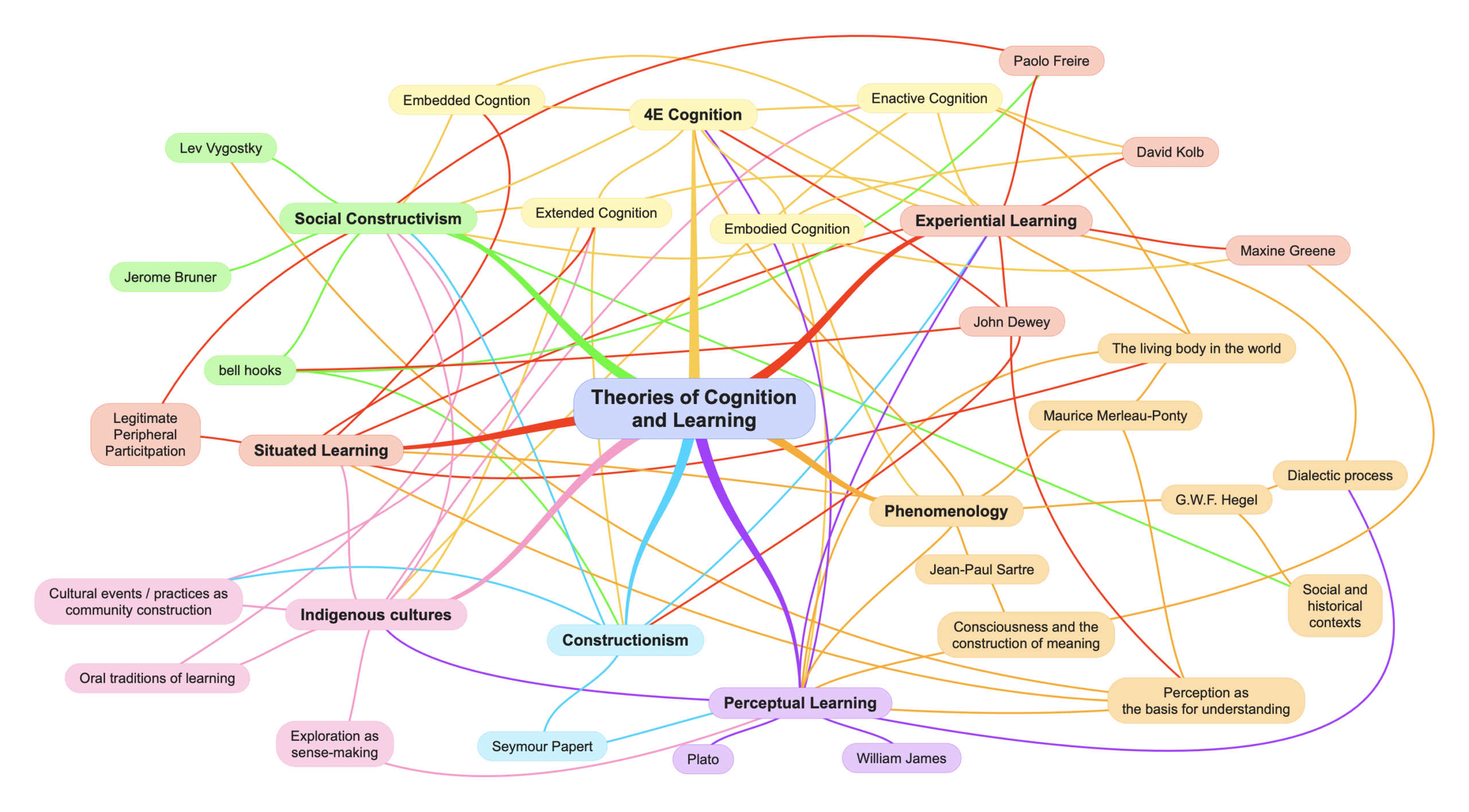
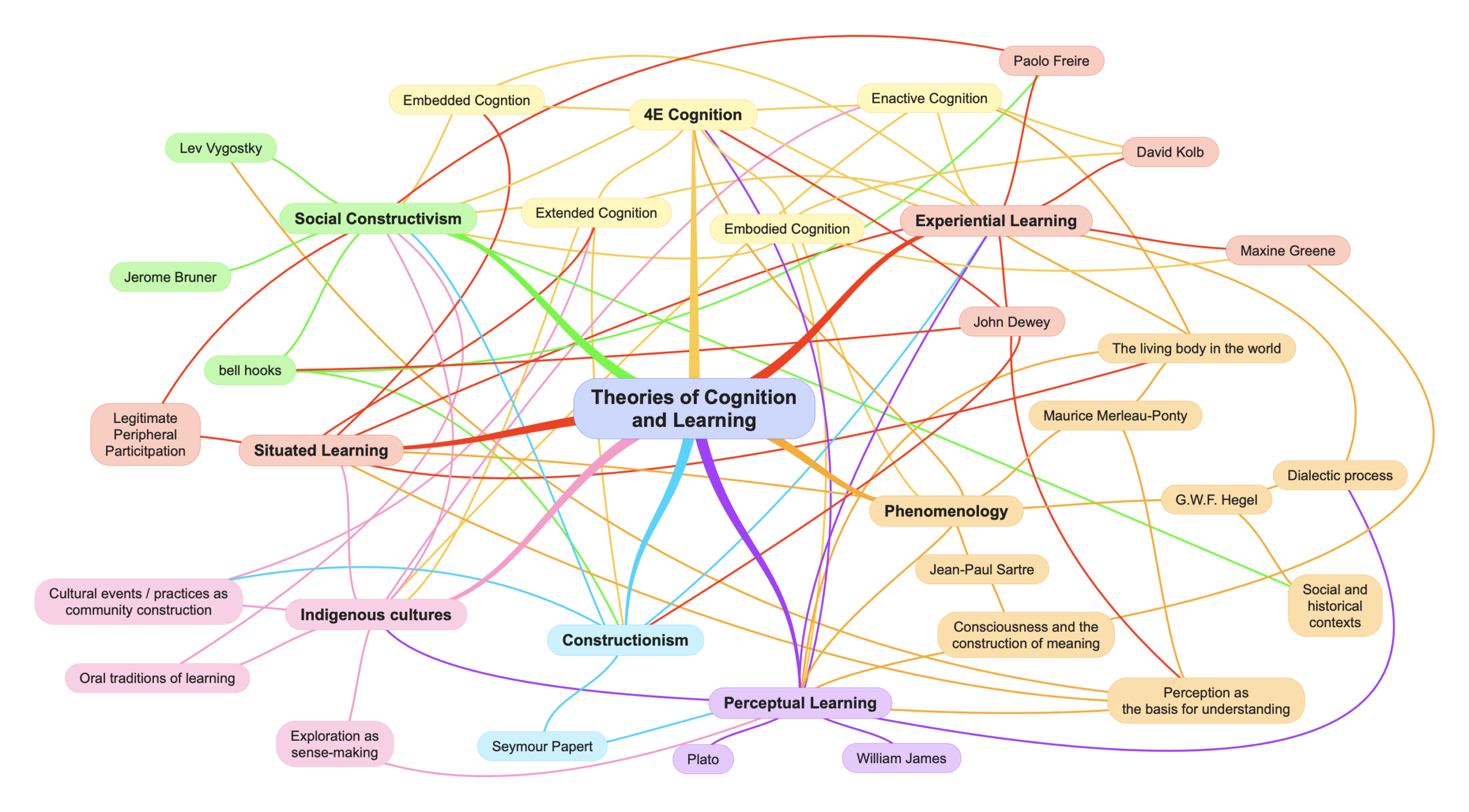
In recent years, I have vastly expanded my research beyond Dewey and Vygotsky to include a greater variety of schools of thought. I am reading various contemporary theorists in the field of 4E cognition and the extended mind theory. I am exploring other forms of experiential learning, including the writings and practices of Paulo Freire and bell hooks. I have recently been introduced to the writings of Maxine Greene on aesthetic education, and will be delving further into these. I am returning, in a way, to phenomenology through the writings of Maurice Merleau-Ponty on the sensory basis for our experience of the world. And I am examining the way our senses themselves "learn" through what has been named perceptual learning and the relevance this has for artists and creators of all kinds.

Pasted image 20250722174739.png

This, of course, is just a selection of the strands I am exploring; the commonality among them is my wish to combine them into a theory of filmmaking and fine arts education. (And, to be clear: not the theory. A theory.) I hope, through this work, to provide a vocabulary for discussing not only what we do, but why we chose to organize our classrooms and workshops the way we do.

Some years ago I wrote a "Handbook for teachers at the Norwegian Film School." It was a very internal and practically-oriented handbook, last updated in 2018. It’s time to look at it anew, and to rewrite it for a broader and international group of educators at film, television, games, and media schools who share a background from professional and artistic practice. And perhaps to give them a tool for discussing their teaching practice with both local and international colleagues.

Footnotes

[^1]: Vygotsky, L. S. (1978). Mind in society. Cambridge, MA: MIT Press.
[^2]: Schön, D. (1983). The Reflective Practitioner: How Professionals Think in Action. Basic Books.

Potential AI workshop

I’m visiting a European film school in a couple of weeks, as part of my pedagogy research. They’ve invited me to hold an AI workshop during my visit, and so I’ve sketched the following as some notes for such a workshop.


While AI has existed in one form or another for several decades, and the term "artificial intelligence" was coined in 1956, it is only since 2022 with the public release of models like Midjourney, Dall-E, and ChatGPT, that the combination of computing power and commercial interests have made it an inescapable part of our everyday lives.

In late 2023, the Norwegian government announced the establishment of national Centres for AI through the Norwegian Research Council, and in June 2025 MishMash was announced as one of 6 national Centres. MishMash represents a consortium covering the fine arts, humanities, law, engineering, and cultural industries and will formally start during the fall of 2025 and have a 5-year duration. This workshop will include a more detailed introduction to MishMash, including some of the potentials for international collaboration.

The bulk of the workshop will be discussion-based. Arts institutions around the world are facing the question of how to prepare our graduates for a world where AI-generated content is becoming more prevalent and AI technologies are becoming more accepted and normalized in an increasing number of professions. Like it or not, we have a responsibility to prepare ourselves and our students for this world. But how?

For some, the key is to embrace the meeting of art and technology, as described in a recent report from the British Council. In fact, AI will enable artists to realize their visions in ways that were simply not possible before. This represents a hopeful approach, where artists continue to embrace new technologies in ways that both create new art and new technologies. This approach affirms the central role the arts play in the evolution and development of our societies, and the importance of human creation and creativity for our future.

But for others, AI represents an existential threat; perhaps not in the science fictional way so frighteningly portrayed in works like Terminator, but as a more subtle, insidious threat towards creativity, authenticity, and, indeed, our humanity as "AI slop" envelops us and our workplaces become an arena where workers serve the needs of AI. If we can no longer tell the difference between what is created by humans and what is created by AI, what happens to trust and authenticity? If we come to rely on AI as a cognitive crutch, what happens to our cognitive abilities and independent judgement?

Ultimately, AI is a human creation, and can be one of the most powerful tools available to us. Will it be a tool for creating a new golden era of creative work, or will it become a tool for keeping us entertained, docile, and obedient?

The way the arts meet this challenge will be a key in how society can answer this question.

Thinking out loud v.03

Finally getting started…

The students are in place and the semester has started. I’ve done my duty as far as participation is concerned, and now I’m settling in to the home office. It’s time to make a plan and ensure I can keep up with both my pedagogical research and participation in MishMash as that work gets off the ground.

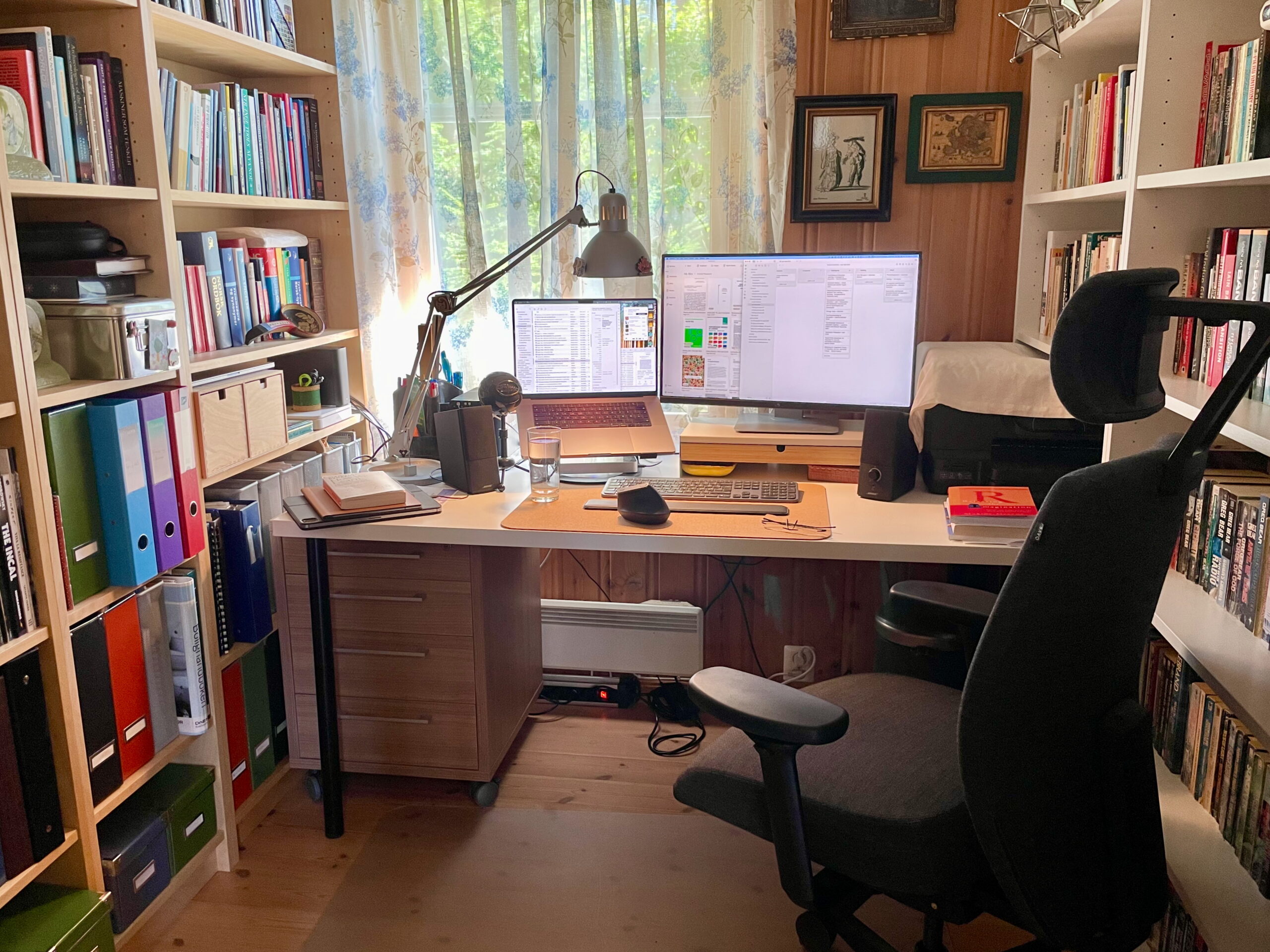
Before the summer I fixed up the home office, so it’s less like a multi-storgage room for all the things we don’t know here to put and more like a working space and home library. I’m pretty pleased with the results, and early indications are that it’s a good space in which to work.

IMG_1441.jpeg

The first order of business is making a prioritised reading list for the coming weeks. I’m currently about a 1/3 of the way through How We Learn by Stanislas Dehaene. The most recent book I completed is The Entanglement by Alva Noë, and the arguments in it informed some of my arguments in the piece on the key role the arts and fine arts education play in society I wrote for Norwegian higher education magazine Khrono a couple of weeks ago (sorry; Norwegian only).

As of now, the next titles on the reading list are:

  • Sourcebook of Experiential Education — part I: Philosophers and Educational Theorists and part III: Psychologists and Sociologists
  • Strange Tools — Alva Noë
  • The Phenomenology of Perception — Maurice Merleau-Ponty
  • Releasing the Imagination: Essays on Education, the Arts, and Social Change — Maxine Greene
  • Unthought: The Power of the Cognitive Nonconscious — N. Katherine Hayles
  • Practicing Embodied Thinking in Research and Learning — Schoeller, Thorgeirsdottir & Walkerden (eds.)
  • Teaching to Transgress — bell hooks
  • Movement Matters — Sheila Macrine and Jennifer Fugate (eds.)
  • Foundations of Embodied Learning: A Paradigm for Education — Mitchell Nathan
  • Toward Wide-Awakeness: An Argument for Arts and Humanities in Education — Maxine Greene
  • The Routledge Handbook of Embodied Cognition — Lawrence Shapiro and Shannon Spaulding (eds.)

I expect this list will develop and change almost daily…

Having music is an important part of how I work. My tinnitus becomes much easier to ignore if I have background music on, and so I spent some time last week organizing my digital music library. Here I suppose thanks are due to Apple, as the Music app for some reason made a mess of the location of my music files which meant I had to rebuild my digital library developed over 25 years completely from scratch… (Who me? Sarcastic? Never!)

I seems all external obstacles are cleared away, and now I have no excuses. I’ll spend about 25-30 hours a week on my research and about 10-15 a week on MishMash — at least for now. I figure out how to adjust that when other things intrude, like the presentation and panel discussion I’m doing at Oslo Pix festival on August 28th. At least, since it’s about AI and the film industry, it’s related to the MishMash work.

Tanker om utvikling av KI-retningslinjer for norsk film

Noen ganger virker det som det kommer nye KI-verktøy nesten hver dag… Det seneste som har dukket opp på min radar er Showrunner — et nettsted hvor hver av oss kan bidra sammen eller enkeltvis som "showrunnere" for KI-genererte animerte serier. Dette er ikke hvilken som helst start-up, men et prosjekt hvor en av investorene er Amazon, gjennom sitt Alexa Fund.

Som mange har påpekt er vi snart på overtid for å utvikle KI-retningslinjer for norsk film, både fiksjon og dokumentar. Vi trenger noe vi kan forholde oss til, som sikrer kunstnerisk frihet og mulighet for eksperimentering i kryssfeltet mellom form, innhold og teknologi, og som samtidig forteller oss hva som er lov og ikke lov når man skal ha offentlig støtte til sine prosjekt. Vi bør også kunne gi en pekepinn på hvordan publikum skal kunne forholde seg til norsk film, og hva som er og ikke er laget av KI. Vi trenger et veikart som både tillater innovasjon og teknologisk utvikling samtidig som det sikrer fremtidige arbeidsplasser og utviklingsarenaer for filmskapere og filmarbeidere.

Her har vi også noen potensielle motsetninger mellom forskjellige deler av bransjen. KI kan anvendes til å effektivisere mange områder av produksjon, og gjøre flere oppgaver raskere og billigere enn er tilfellet i dag. Samtidig kan det gå ut over antall mennesker som får jobb som manusdoktor, til å gjøre nedbrekk og budsjettering, vurdere markedspotensial, og lignende. Her kan man da miste arbeidsplasser i tillegg til at antall mennesker som bidrar med både ekspertise og vurderingsevne til et prosjekts utvikling reduseres.

Opphavsrett, IP og rett til eget åndsverk er spørsmål mange er opptatt av i forbindelse med KI. Her er det to sider; den ene har fått mye oppmerksomhet og handler om at de store generative KI-modellene er trent opp på store mengder åndsverk med høyst tvilsom juridisk og etisk begrunnelse. Når vi bruker disse modellene — uansett formål — bidrar vi til misbruk av andres åndsverk. Den andre siden av dette, som noen har diskutert men som ikke har fått like stor opperksomhet, er spørsmål om hva skjer med eget åndsverk når KI har vært en del av arbeidsprosessen? Her kommer både spørsmål om copyright, som fremdeles er uavklart mange steder, og, ikke minst, hvor stor kontroll har man over hva som skjer med eget åndsverk som er bearbeidet og lagret hos (stort sett) amerikanske tech-giganter?

Man kan også tenke seg at det spesielt i mer kommersielt orienterte prosjekt vil friste å bruke KI for å bearbeide manus og casting basert på algoritmiske vurderinger av markedspotensial. Dette kan gjøre produksjon mindre risikabelt for et produksjonsselskap, men vil ha en effekt på mangfoldet av filmer som lages. Knyttet til dette er regional virksomhet: det er klart vanskeligere å lage mange typer filmer dersom man arbeider i andre regioner enn Osloområdet. KI-verktøy kan muliggjøre et mye større mangfold i typer produksjoner laget i deler av Norge med lite eller ingen filminfrastruktur.

I min forrige artikkel nevnte jeg VFX; det er helt klart at innenfor VFX, animasjon, virtuell produksjon og lignende vil KI-verktøy gi både muligheter som tidligere ikke har vært innenfor økonomisk rekkevidde for norske produsenter. Samtidig kan det ha en stor og potensielt ødeleggende effekt på arbeidsmarkedet for (spesielt) uerfarne filmarbeidere på de feltene. Her er det naturlig å utforske hvordan dette vil påvirke spillproduksjon også.

Dokumentaren byr også på egne utfordringer. Når man lager fortellinger med utgangspunkt i virkeligheten, hvor mange kunstige virkemidler kan man tillate seg å bruke? Bruk av animasjon og gjenskapte situasjoner er allerede akseptert i dokumentar, men kan man tillate seg å gjenskape situasjoner eller animere med bruk av KI? Når bikker det over fra dokumentar til dokudrama?

Både klipp og lyd har lenge brukt verktøy med algoritmestyrte, maskinlæringbaserte verktøy som automatiserer tidskrevende prosesser. Men når går det fra å være et verktøy som letter prosesser som er i veien for kreativt arbeid til å være et verktøy som erstatter kreative prosesser?

Alle disse spørsmålene er selvfølgelig relevant for Den norske filmskolen og andre filmutdanninger. På den ene siden vil vi utvikle kunstnere som kan, innenfor alle fagfelt, bidra til å gi filmen det autentiske og menneskelige som kunsten er. Men på den andre siden skal vi også utdanne unge talenter som skal ha mulighet til å få en lang karriere som profesjonell filmskaper — og da må de beherske alle relevante verktøy, både tradisjonelle og nye.

En fellesnevner for alle feltene er nok at det vi kan akseptere i morgen vil være forskjellig fra det vi kan akseptere i dag. Hvordan skal vi forholde oss til utviklingen på en måte som ivaretar kunstnerisk integritet?

Mitt ønske og forslag er følgende: NFI eller (kanskje helst) Kulturdepartementet oppretter et utvalg som skal se på alle disse og flere relaterte spørsmål. Utvalget bør få en frist på maksimum 6 måneder på å levere en rapport med forlag til retningslinjer. Utvalget bør være representativ for bransje, forvaltning, geografi og utdanning men samtidig få nok mennesker slik at det blir minst mulig komplisert å komme i gang og arbeide konsentrert. (Jeg tenker en mulig sammensetting er 3 representanter fra forskjellige fagområder oppnevnt av Bransjerådet, 2 representanter fra utdanning og forskning, 1 representant oppnevnt fra de regionale filmsentrene, 1 oppnevnt av NFI. Det er viktig at både fiksjon og dokumentar er representert i denne gruppen. Dersom spill og tv-produksjon skal med i mandatet må dette justeres.) I tillegg bør det utnevnes en større referansegruppe som skal bistå med både ekspertise, bidrag og (ikke minst) grundig tilbakemelding på utvalgets utkast til rapport — her må teknologisk og juridisk kompetanse være representert, i tillegg til distribusjonsleddet og kringkastere.

Thinking out loud v.02

Towards the end of Making[^1], Tim Ingold describes the act of drawing: "…drawing is not the visible shadow of a mental event; it is a process of thinking, not the projection of a thought." (p.128, emphasis in original). He describes the interplay between the artist (both their skill and their intention), the tool (the pencil), the material (the paper) and how the drawing is an artifact that comes into being through the active interaction of these things. He makes a point of emphasizing that it is not the case that the artist conceives of the finished drawing, and then utilizes the available tools (the hand, the pencil, the paper) but rather that all the elements that go into making a drawing are necessary for the act of creation itself.

While Ingold does not refer to 4E cognition directly, it is clear to me that this is what he is talking about — the interplay of the creative impulse, the skilled hand, the pencil, the paper are all part of the artists extended mind, where all the elements go together to create the drawing. Furthermore, the act of creation is not the result of a singular moment of inspiration but rather a process where the artwork is in a state of becoming over time.

Drawing, like all art — and indeed, most human activities — involves and engages the body (ie. the embodied mind) through the senses. While one aspect of my research this fall will be to explore the phenomenology of Merleau-Ponty and our sensory experience of the world, I am also fascinated by the notion of perceptual learning, as described by Kevin Connolly in his Perceptual Learning: the Flexibility of the Senses.[^2]

Connolly, following the research of Eleanor Gibson and others, defines perceptual learning as "…long-lasting changes in perception that result from practice or experience." In the case of drawing, this is relevant in that an experienced artist will feel the movements and pressure necessary to achieve the desired effects in the drawing in a completely different way than I — who can, at best, create the occasional doodle — will. The sense- and motor memory of the body has been attuned through practice and experience. The example used by Connelly (and attributed to William James) is that of the expert wine taster who through long practice and experience has trained her taste buds to identify the origin, the grape, the vintage of the wine with a precision that the wine-loving amateur cannot hope to match.

Another element this brings to mind for me is Dewey: I have yet to read Art as Experience, but have it on my reading list for the fall. Dewey’s ideas of experience in education are foundational for the programmes at the Norwegian Film School (and, I believe, for all education). The interplay between experience and reflection is essential for learning to become an artist. The viewer of a work of art has an experience that is both limited to the time which they are viewing the work, but also ongoing, where the impact of the work can be lasting and permanent.

As much as the artist becomes altered through experience, through cognitive development, and through perceptual learning, so too the audience becomes altered through their experience of art. In film, we often talk about how the audience has developed different sensibilities. We talk about things like attention span, the tolerance for graphic scenes, the expectations of tempo and how these are different today than they were 20, 40, 60 years ago.

Many stray thoughts in this one, but it will tie together in the end — I hope! And the end result should be a better understanding of how artists (and, indeed, all humans) learn and how we can design educational programmes that give emerging artists the tools to embark on long and successful careers.

Footnotes

[^1]: Ingold, Tim. Making: Anthropology, Archaeology, Art and Architecture. Routledge, 2013, https://doi.org/10.4324/9780203559055.
[^2]: Connolly, Kevin. Perceptual Learning: The Flexibility of the Senses. Oxford University Press, 2019. academic.oup.com, https://doi.org/10.1093/oso/9780190662899.001.0001.

Utdanning, arbeidslivsrelevans og samfunnsnytte

En gjenganger i debatten om høyere utdanning er begrepet «samfunnsrelevans», ofte satt i sammenheng med begrepet «arbeidslivsrelevans». Hva som legges i disse begrepene er litt fleksibelt; som oftest gjenspeiler det prioriteringene til den som bruker dem og refererer sjelden til noe verifiserbart. For tiden snakkes det mye om gamle favoritter som helsefag, ingeniørfag og lærerutdanning, men også forsvar, IKT (som nå ofte skal bety kunstig intelligens) og grønn omstilling.

Det er lett å være enig om at disse fagområdene er viktig. Samtidig er de samlet sett (med unntak av lærerutdanning) veldig rettet mot anvendt naturvitenskap og teknologi, og de som løfter dem gjør det ofte samtidig som de sier at andre fagområder, spesielt innenfor humaniora og relaterte fag, er mindre viktig for de kan ikke anvendes for å «løse fremtidens utfordringer».

Men stemmer dette? Nå har heldigvis den pågående diskusjonen om «tullefag» unngått de sedvanlige sleivsparkene mot kunstfaglig utdanning, men spørsmålet som ligger og vaker er: Er kunst og kunstfaglig utdanning uvesentlig når vi tross alt skal løse klimakrisen, forsvare oss i en urolig verden og bygge industri vi kan «leve av etter oljen»?

Det å skape kunst er kanskje noe av det som kjennetegner oss mennesker, og skiller oss fra andre dyr. Arkeologien viser mennesker har holdt på med billedkunst og musikk i minst 50 000 år — så lenge at det er utenkelig å skille menneskelig utvikling fra menneskelig kunst.

En ting som kunsten gir oss er innblikk i det som ikke finnes. Kunst viser det umulige, det fantasifulle, det irrasjonelle samtidig som den binder dette sammen med den menneskelige og naturlige verden vi befinner oss i. Dermed muliggjør kunsten at vi strekker oss mot det ukjente — at vi utvikler både oss selv og samfunnet vi lever i. Fordi kunsten er nyskapende muliggjør den nyskaping også på andre områder.

Denne effekten av kunsten gavner ikke bare kunstnerne selv, men alle som opplever kunst. Etterhvert begynner også forskning å vise at kunsten har positive effekter for de fleste samfunnsområder, og bidrar til å skape kultur for innovasjon, kreativ problemløsing, nysgjerrighet og flere av de ferdighetene World Economic Forum har identifisert som de viktigste ferdighetene i fremtidens økonomi.

Sett i dette lyset er det paradoksalt at dagens Regjering velger å nedprioritere kunstutdanning nettopp når vi som samfunn trenger som mest det kunsten gir oss. At opposisjonspartier i valgkampmodus velger å prioritere det instrumentelle i stedet for å sette samfunnets behov først. Jeg etterlyser politikere som makter å løfte blikket, og tør å satse på det som kanskje ikke gir kvantitativ avkastning i morgen men heller bygger et innovativt, kreativt og tilpasningsdyktig samfunn for årene som kommer.

KI-retningslinjer for norsk film?

I mai i år publiserte British Film Instutute sin KI-veileder, AI in the Screen Sector: Perspectives and Paths Forward. Rapporten ble utviklet for BFA av CoSTAR Foresight Lab og tar for seg mange sider av KI-utviklingen, både det som skjer (og har skjedd lenge) i bruk av maskinlæring og automatisering i verktøy og programvare som brukes daglig i film og tv-produksjon og de nyere, generative verktøyene som har tatt mye oppmerksomhet de siste 3-4 årene. Rush Print oppsummerer noen av reaksjonene her hjemme i sin artikkel “– Vi trenger en oppdatert og tydelig KI-veiviser.” (bak betalingsmur).

En ting som påpekes i Rush Print-artikkelen er at mye av den offentlige responsen og diskursen virker reaktiv. Vi er tatt på senga, og famler litt rundt for å finne ut hvordan vi skal håndtere den (sannsynligvis) store omveltningen som kommer vaskende over oss som en flodbølge.

Samtidig ser vi andre deler av verden responderer på helt andre måter. I sommer har vi kunnet lese at et indisk produksjonsselskap har brukt KI for å lage en ny versjon av en spillefilm de opprinnelig ga ut i 2013. Den opprinnelige filmen, et romantisk drama, hadde en tragisk slutt. Den nye versjonen har en KI-skapt lykkelig slutt. I vår ga Netflix ut den argentinske science fiction dramaserien El Eternauta. Her har produsentene brukt generativ KI for å skape en storslått VFX-scene som ellers hadde vært utenfor økonomisk rekkevidde for dem. Og fra Hollywood kan vi lese rapporter om økende bruk av KI til å analysere og forbedre manus, hvor menneskelige script doctors og ghost writers erstattes av generative språkmodeller.

Disse tre eksemplene, og utallige andre, viser med all tydelighet at KI ikke er noe som kommer; det er her og i større utstrekning enn de fleste er klar over. Det er en del av hverdagen vi beveger oss i, både i norsk film og i samfunnet forøvrig. Og selv om jeg tør påstå at det store flertallet av skapende filmfolk kanskje blir forferdet over de tre eksemplene jeg trekker frem vil de fleste av oss, mer eller mindre motvillig, innse at dette er en del av fremtiden for store deler av bransjen.

Eksemplet med El Eternauta peker mot at det sannsynligvis blir VFX-bransjen som merker effekten at KI brukes i større skala først. Det er mange tidskrevende og dyre prosesser som relativt enkelt kan automatiseres med KI. Dette vil produksjonsselskaper og distributører ta i bruk, selv om bilder skapt av generativ KI ikke kan manipuleres like nøyaktig og presist som menneskeskapte.

Og med dette kommer også spørsmålet om autentisitet inn. Det virker naturlig å tenke at autentisitet er noe forbeholdt menneskelig kreativitet. For at et kunstverk skal kunne berøre, skal kunne si noe autentisk, vil de fleste av oss mener det må ligge en menneskelig intensjon og kreativitet bak. Men nå begynner forskning å vise at når publikum ikke vet om det de ser eller hører på er menneskeskapt eller ikke så er det ikke så opplagt at de vil foretrekke det menneskeskapte. Det er først når vi gjøres oppmerksom på at det vi har opplevde er skapt av en kunstner eller en KI at vi klart foretrekker det menneskeskapte.

Jeg tenker disse spørsmålene er for store og overgripende til at vi kan — eller bør — forvente at NFI lager en veiledning, et sett med regler, norsk film skal forholde seg til. Samtidig er det klart at Filminstituttet må være viktig del av slike retningslinjer. NFI bør se til BFI, og bestille en rapport med retningslinjer fra de kompetansemiljøene som finnes på dette området. Her må både utdanning — gjennom Den norske filmskolen, TV-skolen og Spillskolen på INN, samt fagmiljøene ved Høgskolen Kristiania og Universitet i Tromsø (filmkunstskolen i Kabelvåg) og flere — bransje gjennom organisasjoner, produksjonsselskap, interesseorganisasjoner og nettverk (som AIAIAI og Oslo Kreativ AI), samt regionale filmsentre og deres samarbeidspartnere på banen. Hvis slike retningslinjer skal speile bredden av behovene i norsk film må de også produseres av en større bredde aktører enn de som sitter i Dronningens gate i Oslo.

I denne sammenheng tror jeg også MishMash — Centre for AI and Creativity vil spille en viktig rolle. MishMash representerer hele bredden av kunstfelt i Norge, og film er representert både gjennom Filmskolen og Høgskolen Kristiania. Senteret skal startes opp i løpet av høsten, og har et viktig oppdrag i å lede utvikling og forståelse for bruk av KI i kunst og kreative næringer, samt beslektede områder. I denne sammenheng vil det også bli åpninger her for flere aktører fra kunstfeltet og bransjen.

Utover dette peker BFIs rapport på noe vesentlig, som også er tilfelle i Norge: manglende ferdigheter og kompetanse. Vi trenger etter- og videreutdanning for både erfarne og nye filmarbeidere. Produsenter, regissører, forfattere, alle trenger mulighet for opplæring innenfor KI. Men også de som vil se jobbene endres eller forsvinne totalt trenger et tilbud som kan gi omskolering; et tilbud som sikrer norsk film ikke mister sårt tiltrengt erfaring og kompetanse men samtidig sikrer at jobbene som gjennomføres er relevante også i fremtiden.

Som undervisningsleder ved Den norske filmskolen er det naturlig for meg å tenke at her skal og må Filmskolen ha en sentral rolle. Men vi kan ikke gjøre dette alene, og vi trenger et konsortium som bringer sammen utdanninger, offentlige instanser, produksjonsselskap, bransjeorganisasjoner og mange flere for å møte disse utfordringene sammen — et konsortium som ansvarliggjør oss alle for å bidra til å løse utfordringene vi står over for og sikrer en felles styrke som gjør det umulig for myndighetene å ignorere.

Why We Ar/t/

I have worked in and around the arts for most of my adult life, primarily music, theatre, and film. I know art is important, not jut for me but for most of us — and for a healthy, functioning society. At the same time, art is not instrumental. It does not provide easily quantifiable benefits, where a «return on investment» can be calculated and presented in a spreadsheet. The benefits we — both individually and as a society — accrue from art is valuable precisely because it’s not quantifiable. It is intangible, but at the same time foundational.

One of the most damaging effects of neoliberal new public management has been the increasing emphasis on the measurable and the quantifiable. In our eagerness to ensure the taxpayers money is spent «wisely», we have become unable to judge value, choosing instead to focus exclusively on costs. And in so doing, we forget what makes us human, we forget what makes us grow and reach for the unknown.

As Alva Noë points out in The Entanglement, humans have been making art for as long as we have existed. Cave art dated to over 50,000 years ago, musical instruments created by Neanderthals from around the same time demonstrate that the need to express ourselves is part of who we are. One cannot separate art from humanity and still retain that which makes us human.

Artistic expression is not just the domain of artists — it is integral to our daily lives, and we all demonstrate this through the myriad of choices we make each day as we decide how to present ourselves to the word. Brian Eno and Bette A. show this clearly in What Art Does.

Recent cognitive science also shows that art is not just an isolated aspect of our humanity, but has profound impacts on all aspects of our existence.[^1] That the practice of creating art is profoundly important to the artist is obvious. Perhaps less obvious is that the act of viewing art and participating in cultural activities is also profoundly important to every member of society. Here we come back to Noë, and can see that since (one of) the function(s) of art is to both make us aware of social and cultural norms and to challenge them, art is crucially important for both personal and societal development. Without it, we would be trapped in another essential aspect of our nature, the desire for continuity and predictability, and would stagnate.

In higher education in Norway, there is also a paradox at the moment: like many countries, the Norwegian government wants to support education that “meets the need of the future workforce” and at the same time encourage innovation and entrepreneurship. They do this using the logic of the spreadsheet and the quantifiable, and thus believe that funding programmes tied to jobs there is demand for today will somehow ensure we are also preparing ourselves for meeting the challenges of tomorrow. And in this worldview, there is no reason to emphasize education in the arts, and so funding for arts programmes can be cut drastically.

The problem, of course, is that newer research shows[^2] that the benefits of the arts extend far beyond the cultural and creative industries — in fact, the research shows that having a vibrant and active artistic and cultural sector feeds innovation and growth in many, if not all, sectors of society. And thus, cutting public funding for the arts and culture, reducing investment in fine arts education will, over time, reduce the innovative and growth potential of all sectors of society.

Footnotes

[^1]: See, Anderson, Miranda. “4E Cognition and the Mind-Expanding Arts.” European Journal of Philosophy in Arts Education 7, no. 02 (March 22, 2024): 7–64. https://doi.org/10.5281/zenodo.7451462.
[^2]: Sacco, Pier Luigi, Piotr Bialowolski, and Dorota Weziak-Bialowolska. “Culture and Creativity, Skills Building, and Growth: What Have We Missed?” Humanities and Social Sciences Communications 12, no. 1 (February 21, 2025): 236. https://doi.org/10.1057/s41599-024-04200-0.

A brief overview

This past academic year, I participated in running our internal pedagogy course for the fourth time. Each time has been different, and this time I used the opportunity to introduce more formal educational theory than previous occasions.

One of the last lectures I did include an illustration showing the mind map of where I was at in my research at that time. It might look confusing to others, but it makes sense to me! Pasted image 20250722174739.png
It’s not intended to be used in any academically rigorous setting, but represents some associations I was making at the time (this was around March of this year). I’ve added some new links and eliminated others since then, but still find this map a useful illustration of what I’ll be researching this fall.

css.php